
Jul 9, 2026
Graphene for EV Batteries: Powering the Future of Electric Mobility
The Growing Demand for Better EV Batteries
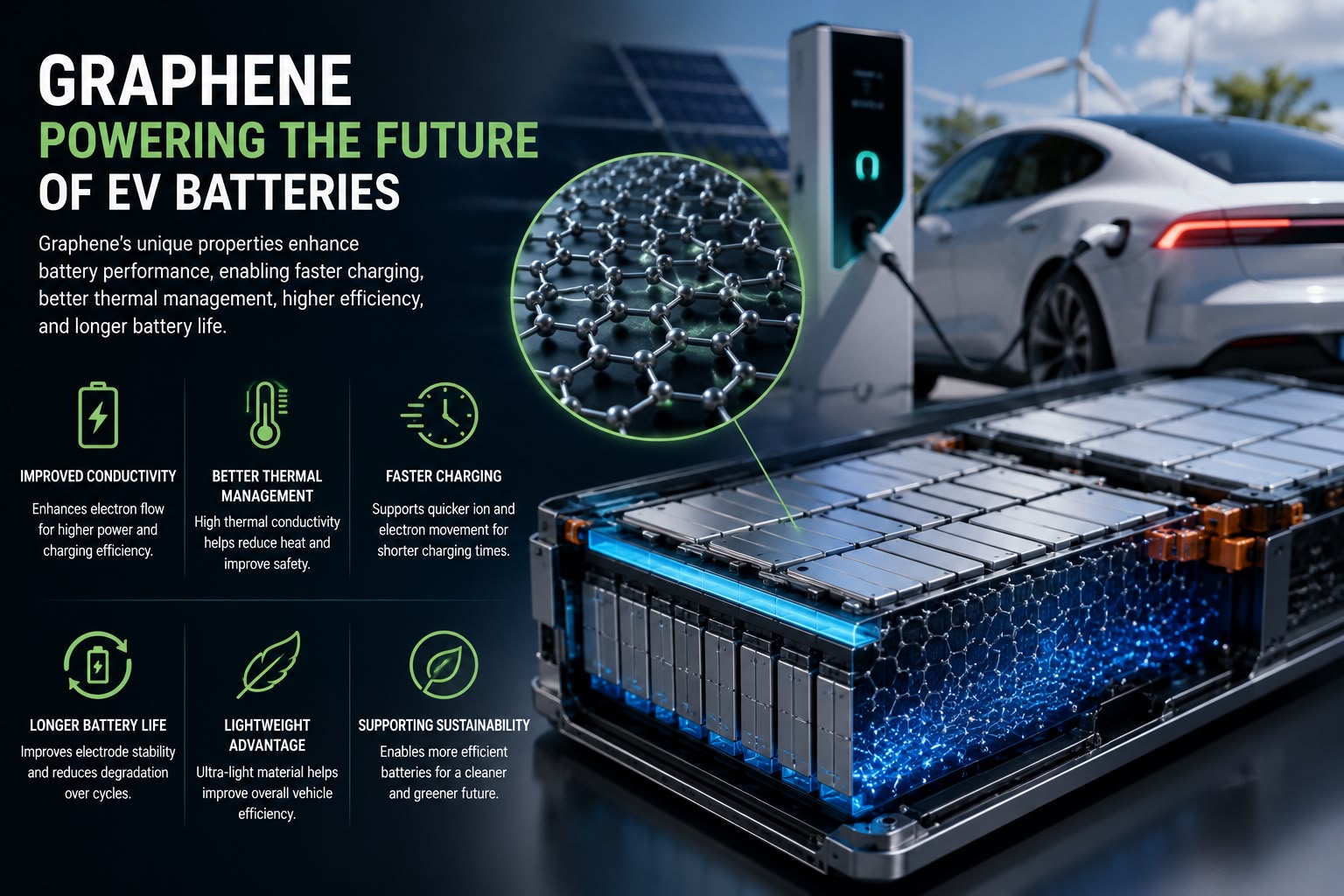
As electric vehicles (EVs) become more widely adopted, the demand for batteries that are safer, faster to charge, and longer-lasting continues to grow. While lithium-ion batteries have significantly advanced EV technology, manufacturers are still working to improve charging speed, energy efficiency, thermal management, and battery lifespan. To address these challenges, graphene has emerged as one of the most promising advanced materials for next-generation battery development.
Why Graphene Matters
Graphene is a carbon-based nanomaterial known for its exceptional electrical conductivity, thermal conductivity, mechanical strength, and lightweight structure. Rather than replacing lithium-ion technology, graphene is used as an additive to enhance battery performance by improving electron flow, heat dissipation, and overall battery stability.
Enhancing Battery Performance
By improving electrical conductivity, graphene can help batteries deliver power more efficiently while reducing internal resistance. Its excellent thermal conductivity also supports better heat management, helping maintain safer operating temperatures during fast charging and high-performance use. Researchers are also exploring graphene's potential to improve electrode stability, extend battery lifespan, and support faster charging capabilities for future EV batteries.
Supporting the Next Generation of Energy Storage
Beyond lithium-ion batteries, graphene is being studied for emerging technologies such as solid-state batteries, lithium-sulfur batteries, sodium-ion batteries, and supercapacitors. Its unique properties make it a valuable material for developing more efficient, durable, and sustainable energy storage systems.
The Future of Graphene in Electric Vehicles
As battery technology continues to evolve, graphene is expected to play an increasingly important role in improving battery efficiency, safety, and durability. Although large-scale commercialization is still progressing, ongoing research continues to demonstrate graphene's potential to support the next generation of electric mobility.
Conclusion
The future of electric vehicles depends on continuous innovation in battery materials. With its outstanding conductivity, superior thermal management, lightweight structure, and ability to enhance battery performance, RAVphene™ Graphene Materials offers a promising solution for developing safer, more efficient, and longer-lasting energy storage technologies.
Recent Post

Extending Industrial Asset Lifespan Through Advanced Material Innovation
Aug 3, 2026

Building More Durable Infrastructure with Advanced Materials
Jul 28, 2026

Graphene in Smart Manufacturing: Enabling the Next Industrial Revolution
Jul 27, 2026
How Graphene Improves Corrosion Protection in Industrial Applications | RAVphene
Jul 21, 2026