
Jun 4, 2026
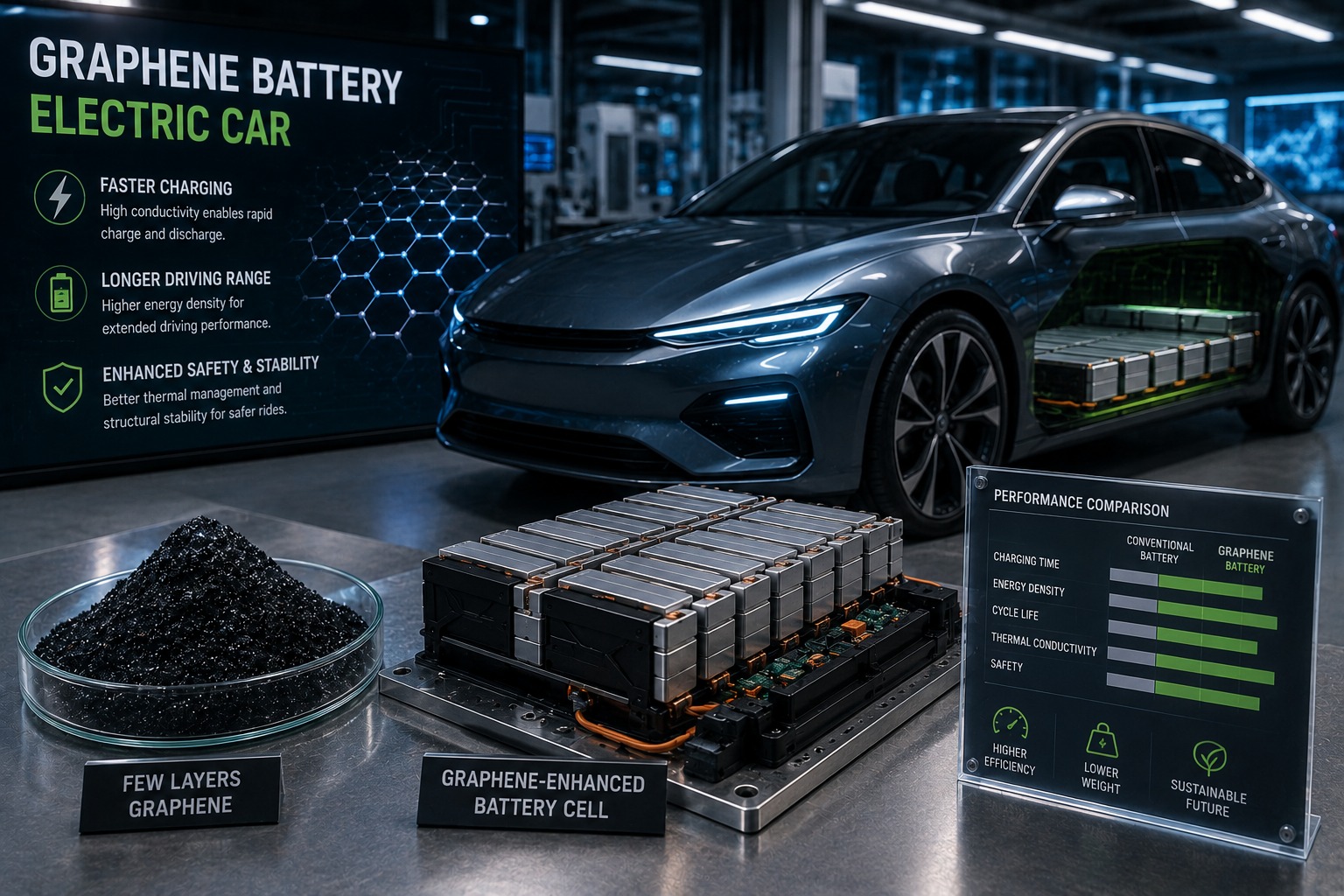
The global automotive landscape is currently undergoing a seismic shift, pivoting away from internal combustion engines toward a future dominated by the graphene battery electric car. As industrial stakeholders and original equipment manufacturers (OEMs) seek to transcend the inherent limitations of conventional lithium-ion systems, the integration of advanced carbon allotropes has emerged as a primary focus. By leveraging the extraordinary physical properties of graphene, we can address the persistent bottlenecks in energy density and electron mobility that have historically hindered the mass adoption of zero-emission transport. Within this framework, the graphene battery electric car represents not merely an incremental upgrade but a fundamental transformation in how energy is stored and discharged in high-performance vehicular applications.
Why Electric Car Batteries Need Better Materials
The current trajectory of sustainable mobility is dictated by the chemical constraints of existing battery architectures. For professional enterprises operating within the automotive supply chain, the transition to next-generation materials is no longer optional but a strategic necessity to maintain a competitive edge in an increasingly crowded marketplace.
Faster Charging Demand
In the corporate and logistics sectors, time is a commodity of unparalleled value. The protracted duration required to replenish a standard vehicle battery remains a significant barrier to operational efficiency. Traditional electrodes often struggle with high-current inputs, leading to lithium plating or excessive degradation. Consequently, the industry requires materials that facilitate rapid ion transport without compromising the structural integrity of the cell.
Longer Driving Range
For long-haul logistics and high-end consumer fleets, the metric of success is energy density. We recognize that increasing the spatial efficiency of energy storage allows for extended operational windows between charging cycles. Current chemical compositions are reaching their theoretical limits, necessitating the introduction of conductive additives that can enhance capacity and reduce the overall mass of the battery pack.
Better Battery Safety and Stability
Thermal runaway remains a critical concern for engineers and safety regulators alike. The volatility of traditional electrolytes under high stress poses significant risks to brand reputation and passenger safety. By incorporating more stable, thermally conductive materials, we can mitigate the risk of catastrophic failure, ensuring that the energy storage system remains robust even under extreme mechanical or thermal load.
How Graphene Can Support Electric Car Battery Performance
Graphene, a single layer of carbon atoms arranged in a hexagonal lattice, offers a suite of properties that are uniquely suited to solve the aforementioned challenges. Its implementation into the graphene battery electric car ecosystem provides a pathway to superior electrochemical performance.
Helps Improve Conductivity
The ballistic transport of electrons within graphene is unmatched by any other industrial material. When integrated into battery electrodes, it creates a highly conductive network that lowers internal resistance. This efficiency ensures that energy loss during discharge is minimized, allowing the graphene battery electric car to extract maximum performance from every kilowatt-hour stored.
Supports Better Heat Control
Effective thermal management is the cornerstone of battery longevity. Graphene possesses an extraordinary level of thermal conductivity, which allows it to act as a heat-dissipating medium within the cell structure. By rapidly moving heat away from hotspots, it prevents the degradation of sensitive chemical components and ensures a uniform temperature profile across the entire module.
Helps Battery Materials Work More Efficiently
Beyond its own conductivity, graphene acts as a powerful synergist when combined with other active materials like silicon or sulfur. It provides a flexible, conductive scaffold that can accommodate the volume expansion of high-capacity anodes. This structural support ensures that the battery maintains its performance over thousands of cycles, a crucial requirement for commercial partners looking for long-term reliability.
If your organization is currently in the research and development phase of optimizing energy storage systems and is seeking high-quality raw materials to pioneer the next generation of power, you may evaluate our specialized industrial solutions and click here to explore our raw graphene offerings. The evolution of the graphene battery electric car is a testament to the power of material science in overcoming industrial hurdles. For organizations operating in the industrial-to-industrial sphere, choosing the right material partner is vital for scaling production and ensuring technological superiority. At Ravphene Ravelware, we stand at the forefront of this revolution as a premier producer of Few Layers Graphene. Our commitment to precision and quality ensures that our graphene products meet the rigorous standards required for modern automotive applications. By integrating Ravphene Ravelware solutions, we empower you to build batteries that are safer, faster to charge, and more durable, solidifying your position in the future of green transportation.
Recent Post

Extending Industrial Asset Lifespan Through Advanced Material Innovation
Aug 3, 2026

Building More Durable Infrastructure with Advanced Materials
Jul 28, 2026

Graphene in Smart Manufacturing: Enabling the Next Industrial Revolution
Jul 27, 2026
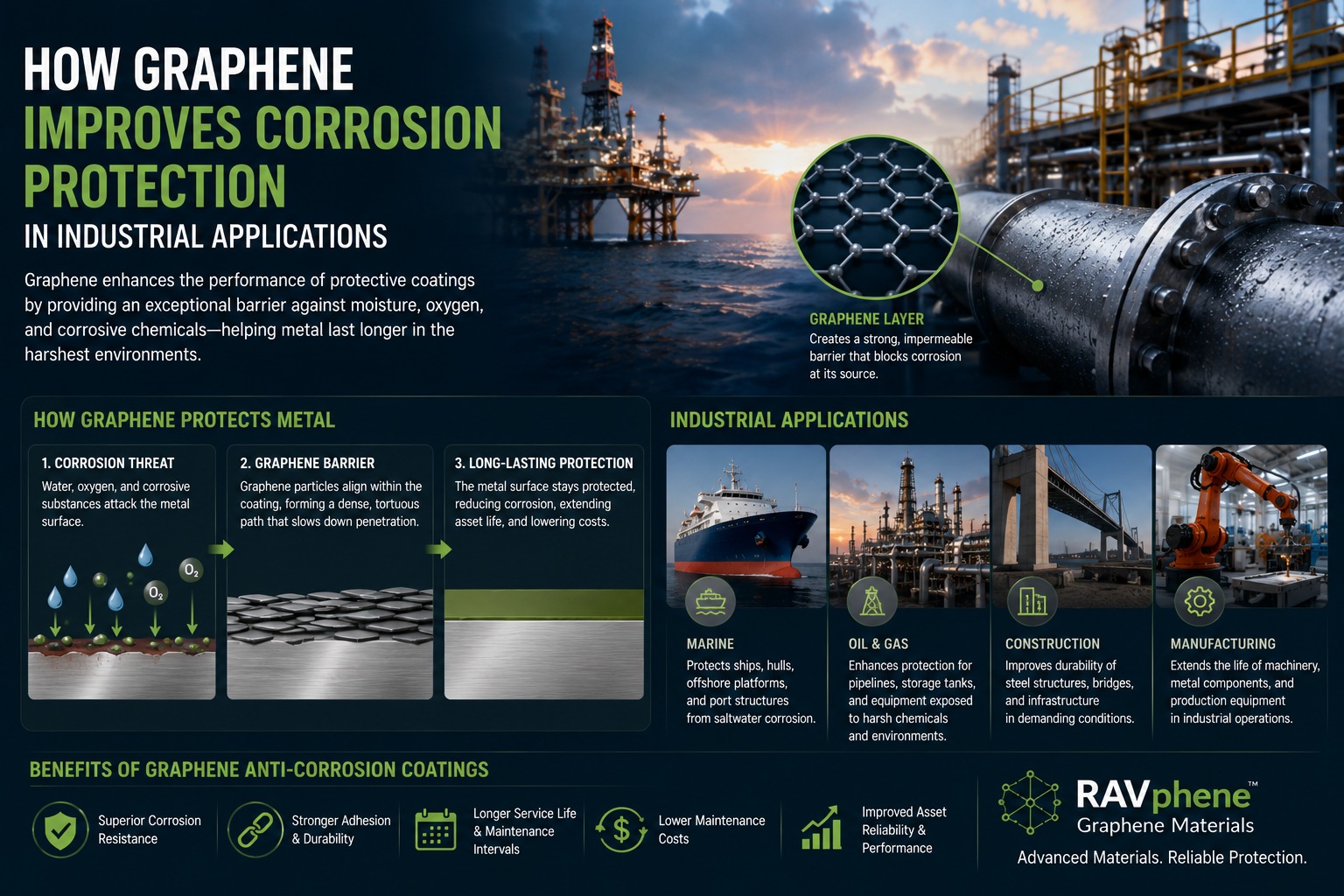
How Graphene Improves Corrosion Protection in Industrial Applications | RAVphene
Jul 21, 2026