
May 18, 2026

The relentless pursuit of material perfection has led the global manufacturing sector to a singular, carbon-based phenomenon.
For procurement officers and industrial engineers asking what is graphene currently used for, the answer lies in its unprecedented atomic architecture, a single layer of carbon atoms arranged in a hexagonal lattice.
This "wonder material" has transitioned from a laboratory curiosity into a transformative industrial input. Understanding what is graphene currently used for is no longer a matter of speculative science but a strategic necessity for enterprises aiming to maintain a competitive edge in high-tech markets.
We recognize that integrating such advanced nanomaterials requires a shift from conventional sourcing to a sophisticated, value-driven partnership model.
Graphene Use in Electronics
The electronics sector serves as the primary frontier for graphene integration. Its electron mobility, significantly higher than that of silicon, allows for a paradigm shift in how we approach device architecture and signal processing speed.
Conductive Parts and Components
In the realm of enterprise-grade hardware, graphene serves as a revolutionary conductive additive.
By utilizing its exceptional electrical conductivity, we can facilitate the production of printed circuit boards (PCBs) and flexible interconnects that outperform traditional copper-based equivalents.
This isn't merely about incremental gains; it’s about redefining the limits of miniaturization in professional hardware.
Sensors and Smart Devices
The question of what is graphene currently used for finds a compelling answer in high-precision sensing.
Due to its massive surface-area-to-volume ratio, even a single molecule of a target gas or biological marker can trigger a detectable change in electrical resistance.
We empower our industrial partners to develop sensors with sensitivities previously deemed impossible, bridging the gap between raw data and actionable industrial intelligence.
Heat Control in Electronic Products
Thermal throttling is the enemy of performance. Graphene’s thermal conductivity—surpassing that of diamond, enables the creation of ultra-thin heat spreaders.
In high-density server environments and heavy-duty industrial controllers, these graphene-enhanced thermal interface materials (TIMs) ensure that your mission-critical hardware maintains peak efficiency without the bulk of traditional cooling systems.
Graphene Use in Energy Products
As global industries pivot toward electrification, the limitations of current lithium-ion chemistries have become a bottleneck. Graphene use offers the molecular scaffolding needed to break these constraints.
Battery Material Development
By incorporating graphene into battery electrodes, we are witnessing a fundamental change in energy density and cycle life.
In commercial and industrial (C&I) applications, this translates to machinery that stays operational longer and degrades slower, significantly optimizing the total cost of ownership (TCO) for fleet operators and energy providers.
Faster Charging Research
Time is the most expensive commodity in logistics and heavy industry. Research into what is graphene currently used for highlights its role in facilitating rapid ion transport.
Graphene-augmented anodes allow for significantly higher charging currents without the risk of dendrite formation, promising a future where industrial electric vehicles (EVs) are replenished in minutes rather than hours.
Better Energy Storage Performance
Beyond standard batteries, graphene is perfecting the performance of supercapacitors. For grid-scale energy storage and regenerative braking systems in heavy rail, the ability to absorb and release massive amounts of power instantaneously is vital.
We provide the material backbone that makes this high-burst energy management a reality.
Graphene Use in Industrial Materials
The mechanical strength of graphene, two hundred times stronger than steel at a fraction of the weight, is revolutionizing the structural integrity of industrial outputs.
Coatings and Protective Layers
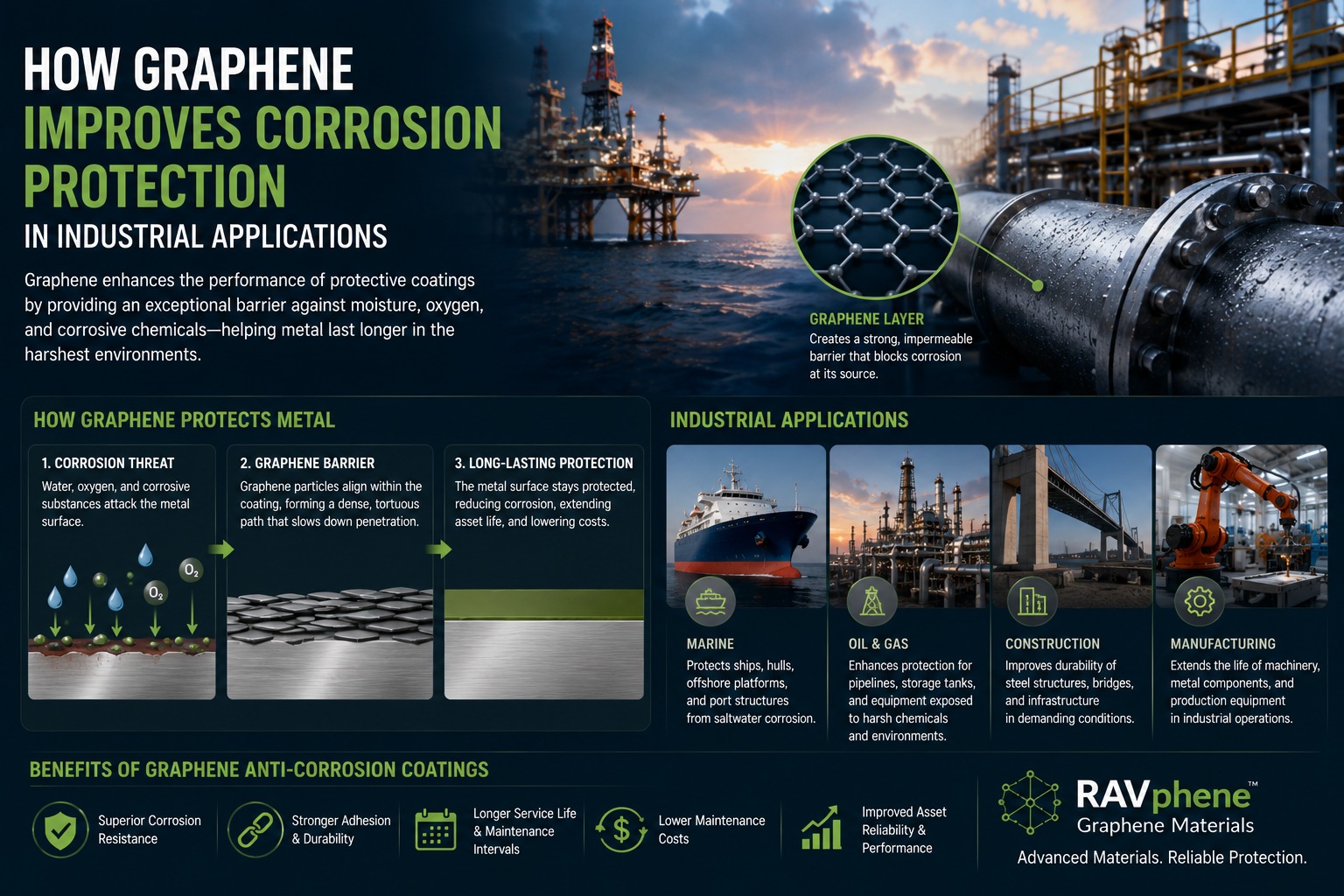
Corrosion remains a multi-billion dollar drain on global infrastructure. Graphene’s impermeable nature creates a molecular-level barrier against moisture and oxidative agents.
When applied to maritime or aerospace components, these coatings provide an almost indestructible shield, extending the service life of your capital assets in the harshest environments.
Composites and Stronger Materials
In the context of inter-organizational manufacturing, the integration of graphene into polymers and resins creates composites with soaring strength-to-weight ratios.
Whether you are producing aerospace housing or high-pressure valves, these materials allow you to reduce weight without sacrificing safety or (durability)[https://en.wikipedia.org/wiki/Durability].
Few Layer Graphene for Product Development
Navigating the complexities of what is graphene currently used for requires specific material grades. Few Layer Graphene (FLG) offers a sweet spot for large-scale industrial applications, providing the benefits of the nanomaterial while ensuring ease of dispersion within existing manufacturing workflows.
In conclusion, the journey from raw carbon to industrial revolution is paved with precise engineering and visionary collaboration.
At Ravphene Ravelware, we stand as a premier producer at the forefront of this evolution. Our expertise in producing high-quality Few Layers Graphene ensures that your organization doesn't just adapt to the future but defines it.
By choosing our graphene solutions, you are securing a partnership dedicated to elevating your product’s performance through the most advanced material science available today. Let us transform your industrial challenges into your most significant competitive advantages.
Recent Post

Extending Industrial Asset Lifespan Through Advanced Material Innovation
Aug 3, 2026

Building More Durable Infrastructure with Advanced Materials
Jul 28, 2026

Graphene in Smart Manufacturing: Enabling the Next Industrial Revolution
Jul 27, 2026
How Graphene Improves Corrosion Protection in Industrial Applications | RAVphene
Jul 21, 2026