Jun 3, 2026
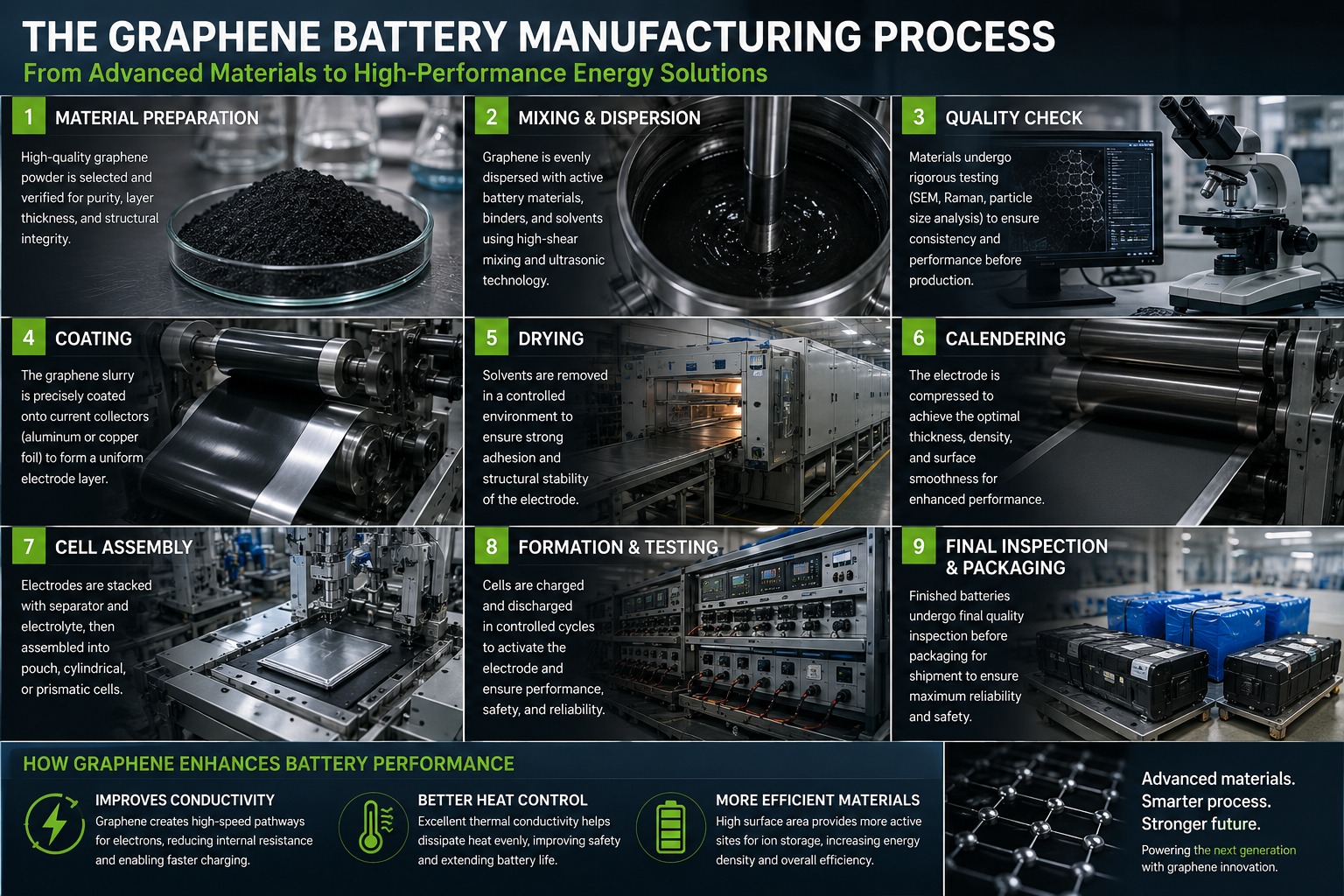
The global shift toward sustainable energy solutions has placed immense pressure on industrial sectors to innovate beyond traditional lithium-ion limitations. At the heart of this evolution lies the graphene battery manufacturing process, a sophisticated sequence of engineering steps designed to harness the extraordinary properties of carbon allotropes.
Unlike standard assembly lines, this specialized production cycle requires extreme precision to ensure that the atomic structure of the material remains intact while being integrated into electrochemical systems. For enterprises seeking to lead in the energy transition, understanding the nuances of the graphene battery manufacturing process is the first step toward operational excellence and long-term industrial viability.
Preparing Graphene Materials for Battery Production
The foundation of any high-performance energy storage unit begins long before the assembly line starts moving. Preparing the necessary substrates involves a deep dive into material science, ensuring that every gram of carbon contributes to the final output's efficiency.
Choosing the Right Graphene Material
Selection is the most critical phase. Not all carbon derivatives are equal; some offer high surface area but poor structural integrity, while others provide durability at the cost of conductivity. We prioritize materials that maintain a balance between these two extremes. By focusing on high-purity flakes, the graphene battery manufacturing process can achieve a level of consistency that low-grade alternatives simply cannot match. This rigorous verification ensures that your industrial applications benefit from a stable and long-lasting power resource.
Mixing Graphene with Battery Components
Once the materials are selected, the next step involves integration into a homogeneous slurry. This is not a simple stirring task. It requires a high-shear mixing environment where graphene is distributed evenly among binders and active cathode or anode materials. If the distribution is uneven, the battery will suffer from hot spots or inconsistent discharge rates. Within the graphene battery manufacturing process we have refined, we utilize advanced ultrasonic dispersion techniques to prevent agglomeration, ensuring every square millimeter of the electrode is optimized for peak performance for our business partners.
Checking Material Quality Before Production
Quality control is our gatekeeper. Before any material enters the main production stage, it must pass through rigorous spectroscopic analysis and electron microscopy. We verify the thickness, lateral size, and defect density of those carbon layers. This proactive approach eliminates the risk of batch failures, ensuring that the graphene battery manufacturing process remains cost-effective and reliable for the large-scale industrial supply chains you manage.
How Graphene Supports Battery Performance
Integrating carbon nanomaterials is not just a trend; it is a fundamental upgrade to the physics of energy storage. Graphene supports battery performance by changing the internal landscape of the cell, allowing us to achieve milestones that were previously considered mere theory in the corporate world.
Helps Improve Conductivity
Graphene acts as a high-speed highway for electrons. In traditional batteries, internal resistance often leads to energy loss and slower charging times. However, by embedding a conductive network directly into the electrode matrix, we significantly lower this resistance. This allows your industrial equipment to charge faster and maintain higher voltage stability throughout its duty cycle, proving why the graphene battery manufacturing process is a game-changer for heavy machinery and logistics fleets.
Supports Better Heat Control
Thermal runaway is the ultimate enemy of battery longevity. Graphene possesses world-class thermal conductivity, which allows it to dissipate heat far more effectively than standard graphite or metal current collectors. By evening out temperature gradients within the cell, our technology prevents localized overheating. This enhanced safety profile makes these units ideal for high-pressure work environments where cooling resources might be limited.
Helps Battery Materials Work More Efficiently
Efficiency is about maximizing the active parts of the battery. The massive surface area of graphene provides more points for ion exchange without increasing the physical volume of the battery. This means you get higher energy density, allowing for the use of smaller and lighter batteries without sacrificing total power output. Through an optimized graphene battery manufacturing process, we ensure your operational footprint is reduced while your energy capacity continues to grow sustainably.
The journey from raw carbon to high-capacity power cells is complex, requiring a synthesis of nanotechnology and industrial-scale manufacturing. As the global market shifts toward more resilient energy solutions, the choice of a production partner becomes highly crucial for business continuity. At Ravphene Ravelware, we have mastered this transition thoroughly.
Specializing in Few Layers Graphene products, we provide solutions that bridge the gap between lab-scale potential and commercial reality. Our commitment to excellence ensures that when you integrate our solutions, you are not just buying a battery, but investing in the future of industrial efficiency.
Recent Post

Extending Industrial Asset Lifespan Through Advanced Material Innovation
Aug 3, 2026

Building More Durable Infrastructure with Advanced Materials
Jul 28, 2026
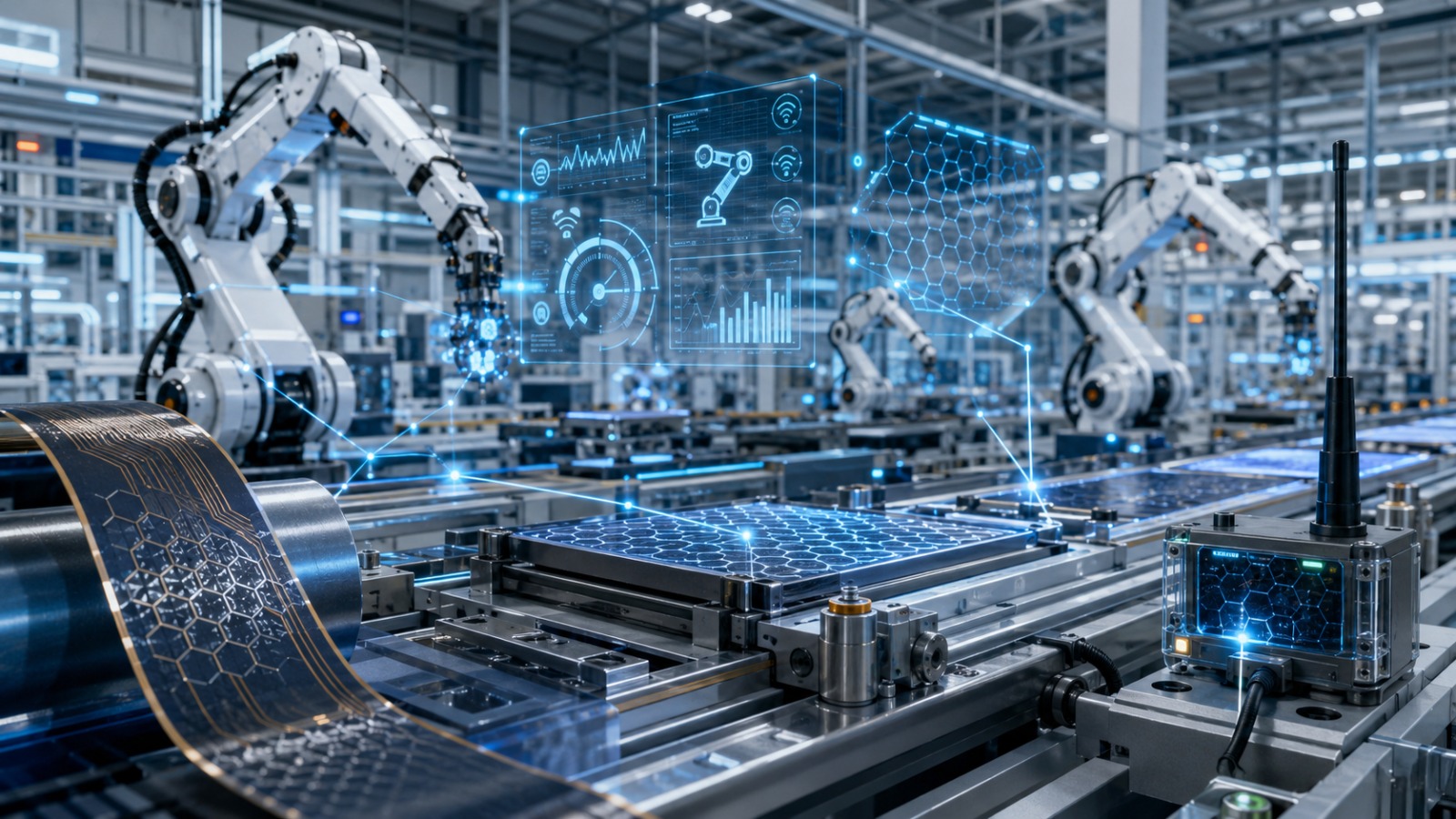
Graphene in Smart Manufacturing: Enabling the Next Industrial Revolution
Jul 27, 2026
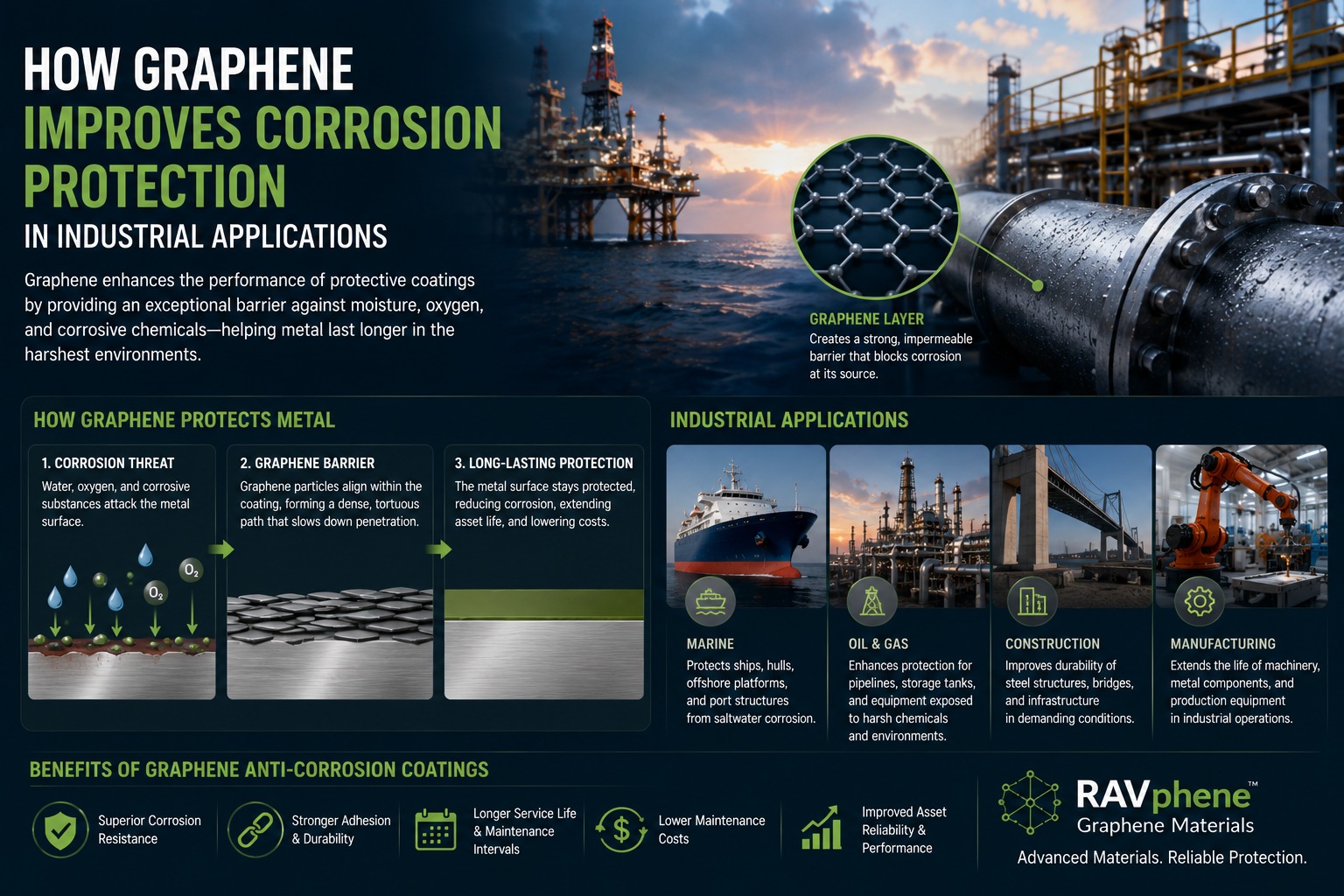
How Graphene Improves Corrosion Protection in Industrial Applications | RAVphene
Jul 21, 2026