
Nov 6, 2024

The development of advanced material technology continues to present cutting-edge innovations that can revolutionize various industries, including the electric vehicle industry. One material that is currently in the spotlight is graphene. This material has extraordinary properties that make it suitable for application in batteries, structural components, and various other elements in electric vehicles (EVs). Graphene is a material consisting of a single layer of carbon atoms arranged in a hexagonal pattern, similar to a honeycomb. Although only one atom thin, graphene is very strong, about 200 times stronger than steel and has excellent electrical and thermal conductivity. These unique properties make it very attractive for various applications, including in the energy, electronics, medical, and of course, electric vehicles sectors.
Graphene Applications in Electric Vehicle Components
- Graphene Battery Graphene batteries are becoming a major focus in the research and development of future electric vehicles. Battery technology that combines graphene and lithium-ion or even graphene with supercapacitors can produce much larger capacities and faster charging processes. Several companies have even begun developing graphene-lithium batteries that are expected to replace conventional batteries in the future.
- Superkapasitor Berbasis Graphene In addition to batteries, graphene-based supercapacitors have great potential in energy storage systems for EVs. These supercapacitors can charge in seconds and have a fairly large energy storage capacity. Although further development is still needed, graphene supercapacitors can be used as battery supports, especially in conditions where high power surges are needed in a short time.
- Composites for Vehicle Structures Graphene can be used in composites used for electric vehicle bodies, replacing conventional materials such as steel or aluminum. Graphene composites have high strength, are resistant to corrosion, and are lightweight. The use of graphene in electric vehicle structures can help reduce vehicle weight and improve energy efficiency.
The use of graphene in advanced electric vehicles could provide a major leap in efficiency, power storage capacity, and sustainability. With its fast charging capabilities, high durability, lighter weight, and environmental benefits, graphene is one of the materials with great potential to overcome the many challenges facing electric vehicles today. However, to achieve widespread adoption, challenges in terms of production costs, scalability, and technology development need to be overcome first. If successful, graphene has the potential to become an integral part of future electric vehicles, bringing the world closer to greener and more sustainable transportation. The good news is, Ravelware Technology, which always strives to be at the forefront of developing sustainable deep technology in Indonesia, is currently the first and only local company that has been able to independently produce graphene from renewable materials that are all available in Indonesia, as well as providing graphene-based technology products that are ready to be directly absorbed by the industry, such as components applied in electric vehicles.
Join us in the follow Ravelware Technology on LinkedIn and Instagram for the latest updates, and experience the benefits of technology that is changing the way we interact with energy.
Copyrighted by PT Ravelware Technology Indonesia
Website: http://www.ravelware.co
Recent Post

Extending Industrial Asset Lifespan Through Advanced Material Innovation
Aug 3, 2026

Building More Durable Infrastructure with Advanced Materials
Jul 28, 2026

Graphene in Smart Manufacturing: Enabling the Next Industrial Revolution
Jul 27, 2026
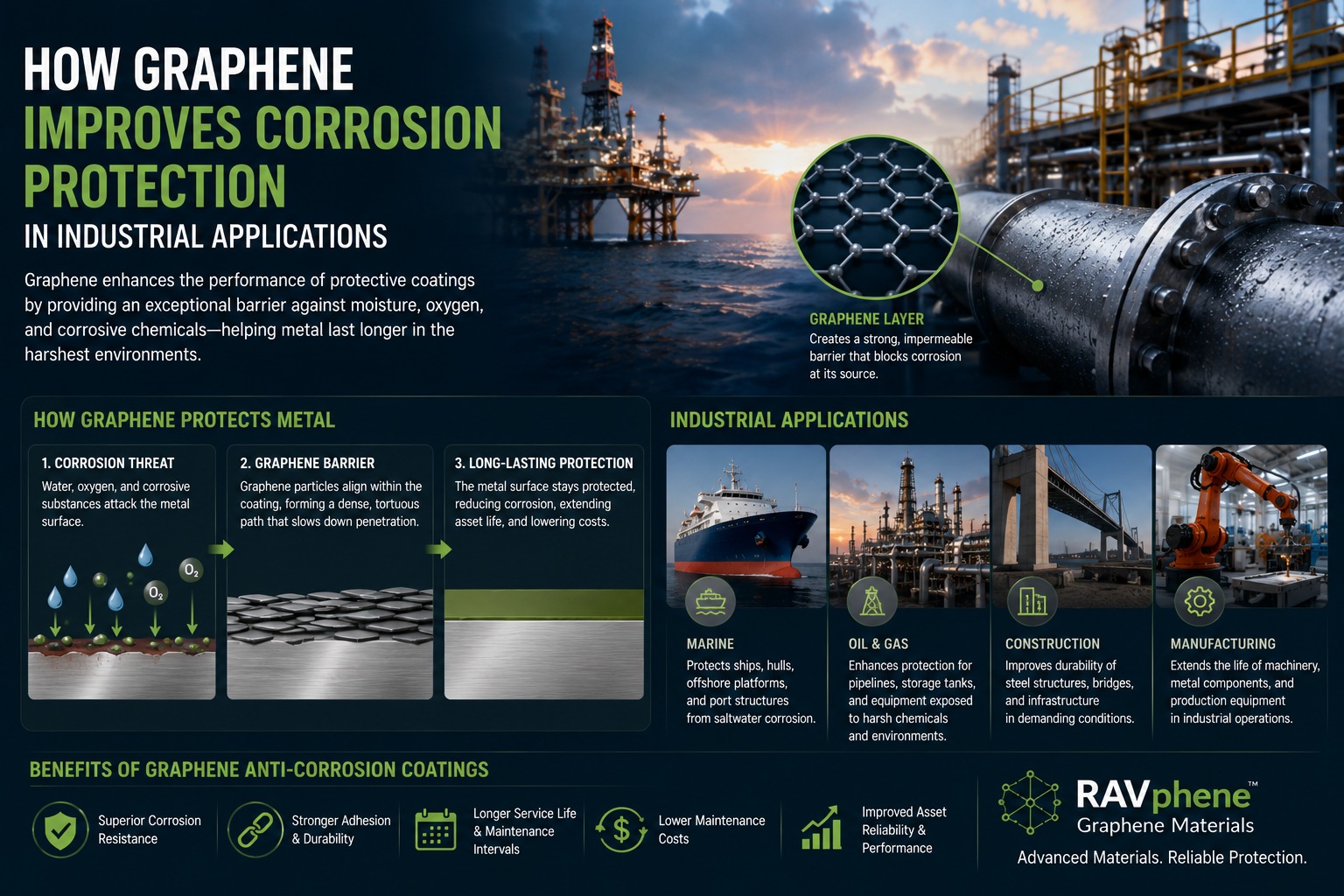
How Graphene Improves Corrosion Protection in Industrial Applications | RAVphene
Jul 21, 2026